

September 1, 2026
Former gang boss found guilty in 1996 murder of rapper Tupac Shakur
Advertisement
Former gang boss found guilty in 1996 murder of rapper Tupac Shakur
)
)
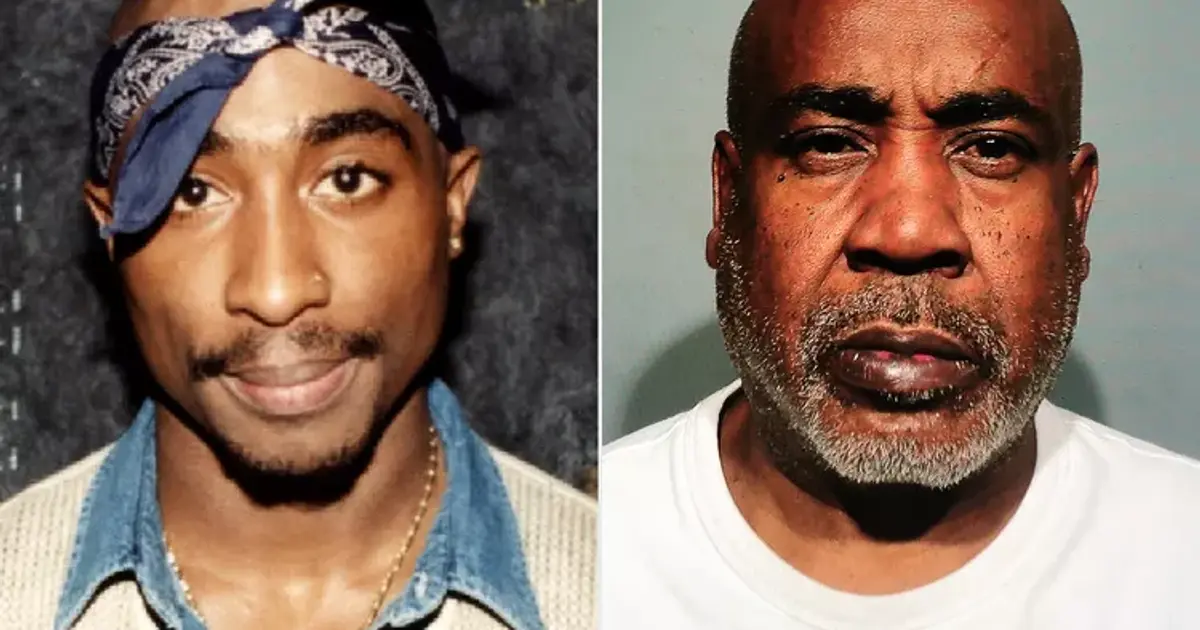
Tupac Shakur; Duane “Keefe D” Davis.
Credit : Raymond Boyd/Getty; Ethan Miller/Getty
Nearly three decades after Tupac Shakur was killed in a Las Vegas drive-by shooting, a jury has convicted former gang member Duane “Keffe D” Davis in the long-running case.
Advertisement
-
Former gang member Duane “Keffe D” Davis, 63, has been found guilty of murder with a deadly weapon in connection with Tupac Shakur’s 1996 killing in Las Vegas.
-
Prosecutors argued that Davis ordered the shooting and supplied the gun, allegedly as retaliation after his nephew Orlando Anderson fought with Shakur and his entourage hours before the killing.
-
Davis’ own statements about his involvement became key evidence at trial; he has indicated that he plans to appeal. His sentencing has been scheduled for 13 October
Advertisement
Davis, 63, was found guilty of one count of murder with a deadly weapon in connection with the death of the legendary rapper, who was shot on 7 September 1996.
The verdict brings a major development to one of the most closely followed unsolved cases in music history.
Davis appeared emotionless as the verdict was delivered in a Las Vegas courtroom. He later told the judge that he intended to challenge the conviction.
Members of Shakur’s family were visibly emotional following the decision, with relatives holding hands, embracing and crying in the courtroom. Outside the courthouse, fans of the late rapper also gathered, with some celebrating while others were seen in tears.
Advertisement
Shakur was just 25 when he was fatally shot. At the time, he was one of the biggest names in hip-hop and had become a defining figure in the genre.
He went on to sell than 75 million records globally, cementing his status as one of rap music’s most influential artists.
The prosecution’s case centred on Davis’ alleged role as the organiser of the shooting.
Although prosecutors did not claim that Davis personally pulled the trigger, they argued that he was the person who authorised the attack and provided the firearm used in the killing.
Advertisement
Davis was previously associated with the South Side Compton Crips street gang. Prosecutors alleged that he arranged the shooting after his nephew, Orlando Anderson, became involved in a physical confrontation with Shakur and members of the rapper’s entourage in Las Vegas earlier that night.
According to the prosecution, the confrontation triggered a retaliation that culminated in Shakur being shot from a vehicle.
Anderson, who was long identified by investigators as a possible participant in the killing, died in 1998 without being charged in connection with Shakur’s murder.
One of the most significant elements of the prosecution’s case was Davis’ own account of events.
Advertisement
Over the years, Davis repeatedly acknowledged that he was inside the white Cadillac from which the shots were fired.
READ : NSMQ 2026 Quarter-finals live tracker: Scores, results and schools advancing to the semi-finals
He also discussed his alleged involvement during a confidential police interview in 2008. The interview had initially been conducted as part of an investigation into the death of fellow rapper Christopher Wallace, better known as The Notorious B.I.G.
Davis later provided further accounts of his alleged involvement in his 2019 memoir, Compton Street Legend, as well as in interviews and other media appearances.
Prosecutors argued that Davis’ public statements effectively amounted to repeated admissions of responsibility.
During closing arguments, prosecutor Binu Palal told jurors that Davis had consistently portrayed himself as the person in charge.
Palal said;
He’s the shot caller – in every instance in every iteration he’s the leader of the South Side Crips
When you have the shot caller sitting shotgun when shots are fired, there’s no doubt he’s responsible.
Advertisement
The prosecution also relied on a court ruling allowing Davis’ 2008 police interview to be used at trial.
Davis’ lawyers offered a markedly different interpretation of his statements.
His defence team argued that the former gang member had exaggerated or invented stories about Shakur’s death to enhance his reputation and generate money from books and media appearances.
During his closing argument, defence lawyer Michael Sanft urged jurors not to treat Davis’ accounts as reliable evidence.
Sanft told the jury;
Advertisement
There’s no proof
The defence maintained that Davis’ statements were examples of bravado rather than genuine admissions of involvement in a murder.
The jury, however, rejected that argument.
After receiving the case on Monday, jurors deliberated for only a short period before returning a guilty verdict.
Advertisement
Shakur’s death became one of the most enduring mysteries in popular music.
His murder occurred during a period when tensions between East Coast and West Coast hip-hop were particularly intense, while rivalries involving the Bloods and Crips also influenced parts of the rap scene.
The lack of an arrest and conviction for decades fuelled numerous theories about who was responsible and why Shakur was targeted.
Davis’ conviction now represents the first successful prosecution directly connected to the rapper’s murder.
Following the verdict, Shakur’s sister embraced one of the prosecutors, while other family members remained visibly emotional.
Advertisement
Davis is scheduled to return to court for sentencing on 13 October.
Before the courtroom proceedings ended, he raised his hand and asked the judge about retrieving some of his personal belongings, including his phone.
He also reiterated his intention to challenge the outcome.
“I would like my stuff,” Davis told Judge Carli Kierny.
Advertisement
He then added: “I would like to appeal this matter.”
The judge informed him that an appeal could be pursued after sentencing.
For Shakur’s family and millions of fans who have followed the case for nearly 30 years, the conviction marks a historic turning point in the search for accountability over one of hip-hop’s most consequential killings.
Advertisement
Latest Videos
)
Advertisement
Videos
Advertisement
,fit(112:112))
)
,fit(112:112))
,fit(112:112))
,fit(112:112))
![Early detection of breast cancer can save lives [PikWizard]](https://image.api.sportal365.com/process/smp-images-production/pulse.com.gh/28102024/af203a6b-cf0b-4d1d-9594-4e42776b7da9?operations=autocrop(112:112))
Advertisement

Originally published on www.pulse.com.gh