

August 17, 2026
Wike Under Fire Over Flooding In Abuja
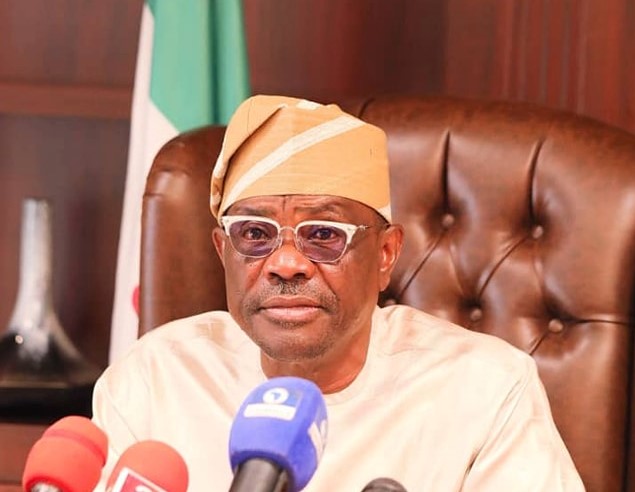
4 hours ago | General News
Wike Under Fire Over Flooding In Abuja


The Minister of the Federal Capital Territory, Nyesom Wike, has come under criticism over the recurring flooding in Abuja, with lawyer and activist Deji Adeyanju calling on President Bola Tinubu to urgently review land allocations and developments across the nation’s capital.

Adeyanju, in an open letter to the President shared on his X handle on Monday, expressed concern over what he described as the deteriorating environmental and infrastructural condition of the Federal Capital Territory.
He argued that Abuja’s original Master Plan provided for green areas, parks, gardens, drainage corridors, canals and waterways not only for aesthetic purposes but also to control flooding and preserve the city’s ecological balance.
According to him, the recent flooding across several parts of the capital should no longer be regarded solely as the consequence of heavy rainfall.
“Areas that historically did not experience significant flooding are now increasingly vulnerable with homes submerged and roads rendered impassable,” Adeyanju said.

He listed several areas identified by the FCT Emergency Management Department as flood-prone, including Lokogoma, Galadimawa, Dogon-Gada, Lugbe, Maitama, Wuse, Garki, the Central Business District, Asokoro, Guzape, Gwarinpa, Nyanya, Kubwa, Gwagwalada, Kuje, Kwali and Abaji.
Adeyanju alleged that some areas originally preserved under the Abuja Master Plan as green spaces, gardens, parks, drainage corridors and waterways had been converted or allocated for residential and other developments.
He cited the green area opposite Blake’s in Area 11, the green area around Rita Lori Hotel, the green area around MTN in Maitama and the green area around the old Customs Office in Wuse Zone 3 as examples of what he described as distortions of the city’s Master Plan.
He also alleged that a major canal in the Maitama area was covered to facilitate residential construction allegedly linked to the Chairman of the Senate Committee on the Federal Capital Territory, Senator Ibrahim Mohammed Bomai.
Adeyanju called on Tinubu to direct “a comprehensive review of land allocations and developments within designated green areas, parks, gardens, drainage corridors, canals and waterways across the FCT.”
He warned that continued construction on drainage corridors and waterways could worsen flooding in the capital.
“Abuja is home to the nation’s most important institutions. It hosts the Presidency, the National Assembly, the judiciary, foreign embassies, international organisations, diplomats and millions of Nigerians who live and work within the city,” he said.
“ If we continue to build over the city’s green spaces, drainage corridors, canals and waterways, there may come a day when even the areas around Aso Rock are not spared from flooding.”
Also reacting to the development, Isaac Fayose, younger brother of former Ekiti State Governor, Ayodele Fayose, blamed what he described as poor planning and alleged indiscriminate allocation of waterways for the flooding.
“Wike has destroyed Abuja. The town is stinking and flooded. I have never seen this kind of complete lunacy and greed before,” Fayose said.
He alleged that parts of Maitama and other areas of Abuja were flooded because canals and waterways had been allocated for development.
Fayose added that the city’s existing Master Plan should be respected and that natural flood plains should not be altered for development.
However, the FCT Administration has rejected the criticism, with Wike’s aide, Lere Olayinka, describing Adeyanju’s comments as an attempt to politicise a longstanding challenge.
Olayinka, in a statement on Monday, said Abuja experienced heavy rainfall on Saturday, resulting in flooding in some parts of the city, but noted that the floodwaters receded after the rainfall.
He argued that flooding in Abuja predated Wike’s tenure, citing flooding recorded in parts of Wuse, Jabi and Lokogoma in 2019, as well as Lokogoma, Efab Estate and Gudu in 2022.
According to him, the recent flooding was a reminder of the challenges associated with the rapid expansion of Abuja, particularly inadequate drainage infrastructure, waste management problems and enforcement of planning regulations.
Olayinka also blamed scavengers for removing drainage covers, thereby exposing drainage channels to refuse and contributing to blockages.
He said the FCT Administration was already taking steps to address the problem, including reviewing the 1979 Abuja Master Plan to reflect the changing realities of the capital.
He added that the administration was installing drainage covers designed to prevent scavengers from removing them.
Originally published on www.thenigerianvoice.com