September 4, 2026
Why Nigeria’s 2027 Election Matters Beyond Its Borders


Why Nigeria’s 2027 Election Matters Beyond Its Borders
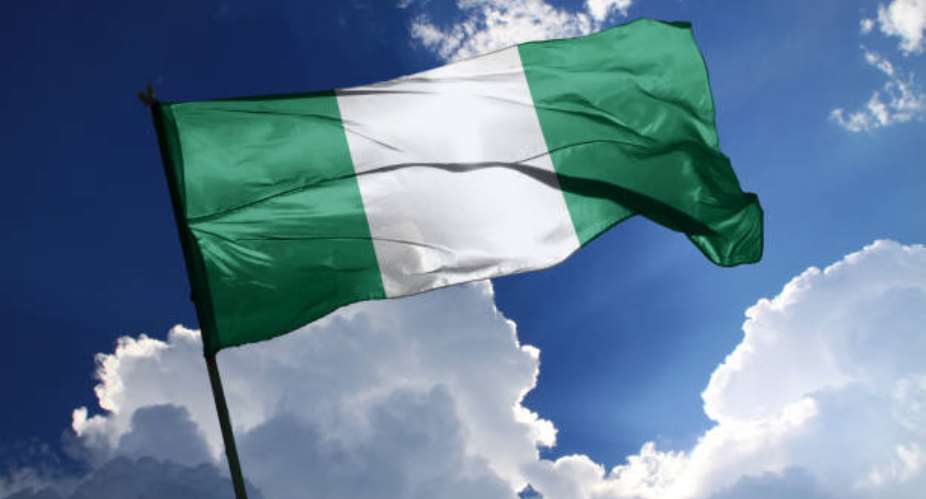
Nigeria’s 2027 presidential election carries consequences well beyond its borders. It will test whether West Africa’s largest state can turn demographic weight, market scale and historical influence into democratic legitimacy, regional stability and continental bargaining power. INEC’s timetable for the 2027 general election schedules the presidential and National Assembly elections for 16 January 2027, with campaigns officially beginning on 19 August 2026. At a time of insecurity, youth unemployment and renewed fragmentation within ECOWAS, a credible election would strengthen Nigeria’s democracy and help steady an unsettled neighbourhood.
Nigeria is West Africa’s demographic anchor, its largest market and one of the few African states whose domestic fortunes can alter the trajectory of an entire region. With more than 237.5 million people in 2025, according to World Bank data, it remains Africa’s most populous country and one of the continent’s indispensable political actors.
Nigerian banks, entrepreneurs, professionals, artists, diplomats and soldiers have long projected influence beyond the country’s borders. Nollywood and Afrobeats have made Nigerian culture one of Africa’s most visible global exports, while its intellectual and diplomatic traditions continue to shape debates on African unity, economic integration and global governance reform.
That is why Nigeria’s troubles are never only national. When it advances, momentum travels through trade, migration, finance, culture, diplomacy and regional security. When it falters, the tremors are felt beyond Abuja. Nigeria is not merely another country in West Africa; it is one of the region’s strategic anchors. Its fate is tied to West Africa’s future — and, increasingly, to Africa’s standing in the world.
History shows what Nigerian leadership has meant for the region. During the civil wars in Liberia and Sierra Leone, Nigeria played a leading role in ECOMOG, the ECOWAS-backed regional force. The intervention was costly, imperfect and contested, but it helped contain conflicts whose consequences threatened to cross borders. Nigeria supplied much of the political will and military capacity, and bore a large share of the financial burden behind the effort.
Nigeria has also been central to West African integration. ECOWAS was created by the Treaty of Lagos in 1975, and Nigeria’s size, resources and diplomacy helped give the institution substance. At its best, Nigerian foreign policy has served peace, regional solidarity and continental unity.
This history is worth recalling because West Africa is again under strain. Coups, violent extremism, trafficking networks, economic hardship and declining trust in institutions have weakened the regional order. In this context, a stable Nigeria is not simply a national aspiration; it is part of the region’s security architecture.
The figures reveal both promise and strain. Beyond its large and youthful population, World Bank data put Nigeria’s current-dollar GDP at $290.79 billion, annual GDP growth at 4.0 per cent and consumer-price inflation at 23.0 per cent in 2025. The same source reports a poverty headcount of 41.8 per cent at the international poverty line of $3.00 a day in 2022. This is the paradox of Nigerian power: immense scale does not automatically translate into leadership. It must be converted into institutional credibility, economic inclusion and a governing compact citizens can trust. Without that conversion, elections risk becoming another round of elite jockeying for power, detached from the economic, diplomatic and institutional foundations needed to restore public confidence and advance regional integration.
That is why Nigeria’s democratic trajectory is so consequential. Each presidential contest tests not only who wins, but also whether institutions command trust, results withstand scrutiny, political actors accept defeat and government can function once the campaign noise fades — without destabilising the country or the region.
Nigeria’s stability is a regional public good, generating benefits that cross borders. Its market confidence, resilient supply chains, diplomatic weight, resistance to unconstitutional seizures of power and capacity for collective security all support subregional stability. A credible Nigeria therefore gives ECOWAS more than a headquarters and a founding memory; it gives the region a centre of gravity. A country absorbed by domestic rancour has less room to lead, fewer resources for regional stabilisation and a harder time marshalling African positions internationally.
Nigeria’s leadership record has been uneven, and its domestic burdens are formidable: insecurity, economic hardship, public distrust, infrastructure deficits and periodic doubts about electoral credibility. Yet these weaknesses do not diminish its importance. They make renewal more urgent, because a constrained Nigeria leaves West Africa with fewer tools at precisely the moment the region needs greater collective capacity.
The argument extends to continental opportunity. The African Continental Free Trade Area needs markets with scale, production capacity, logistics, finance, digital services and political confidence. Nigeria possesses many of these ingredients. If it aligns domestic reform with continental ambition, it can become a catalyst for intra-African trade, industrial value chains and innovation-led growth.
Africa’s demand for a fairer international order depends on the same credibility. The African Union’s Ezulwini Consensus, adopted at the AU Executive Council’s 7th Extraordinary Session in Addis Ababa in March 2005, calls for Africa to have at least two permanent seats on the UN Security Council, with all the prerogatives and privileges of permanent membership, including the veto, and five non-permanent seats overall. Such a demand needs more than moral force; it needs credible continental leadership.
Nigeria’s renewal is therefore bound up with Africa’s global voice. A peaceful, democratic Nigeria strengthens the continent’s claim to a fairer international system; one consumed by its own troubles leaves Africa with less influence at a moment when geopolitical competition is reshaping the world. West Africa does not need a hegemon. It needs a credible, democratic and reforming Nigeria capable of turning scale into shared regional purpose. Nigeria’s political journey reaches well beyond its borders: a stable, democratic Nigeria would not solve all of Africa’s problems, but without one, many become much harder to solve.
Anthony Ohemeng-Boamah writes on international development and socio-economic transformation with a focus on Africa.

Anthony Ohemeng-Boamah, © 2026
A development analyst who writes incisive commentary on African and Ghanaian development, governance, and socio-economic transformation.Column: Anthony Ohemeng-Boamah
Disclaimer: “The views expressed in this article are the author’s own and do not necessarily reflect ModernGhana official position. ModernGhana will not be responsible or liable for any inaccurate or incorrect statements in the contributions or columns here.”
Follow our WhatsApp channel for meaningful stories picked for your day.

Top Stories


54 minutes ago


Originally published on www.modernghana.com