

August 14, 2026
Opleka Festival: Preserving the Culture, Identity and Traditions of the Etulo People
4 hours ago | Culture & Tradition
Opleka Festival: Preserving the Culture, Identity and Traditions of the Etulo People


Culture is the soul of a people. It preserves their history, defines their identity, strengthens their unity and provides a bridge between generations. For the Etulo people of Benue State, Nigeria, few cultural institutions embody these values as profoundly as the Opleka Festival.
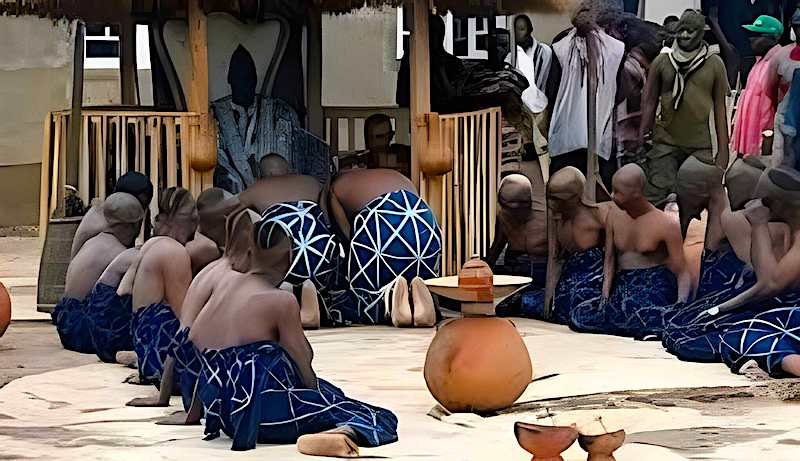
Opleka is regarded as one of the most significant festivals in the life and existence of the Etulo ethnic group. It is not merely a period of merriment, dancing and feasting; it is a sacred cultural institution associated with thanksgiving, prayers, traditional rites, reconciliation, renewal and the preservation of the heritage of the Etulo people.

The Meaning and Philosophy of Opleka
The name Opleka is derived from an Etulo traditional expression, “Opleka totsi negu yenu,” which is also expressed in related Etulo sayings. The imagery behind the expression speaks of a darkening cloud, the exposure of things previously hidden and the revelation of what is concealed when the wind blows.
Within the traditional understanding of the Etulo people, this imagery gives Opleka a profound meaning. The festival is seen as a period when hidden evils and negative forces affecting the land are exposed and confronted. It symbolically represents a cleansing wind that blows away evil, misfortune and anything considered detrimental to the progress and wellbeing of the people.
Opleka is therefore a period of renewal—a time to reflect on the past, appreciate the present and look towards the future. It is also a period during which the people seek divine protection, peace, prosperity, good health, fruitful harvests and development for Etulo land and its people.

A Royal Responsibility
Traditionally, Opleka is a royal responsibility. The Otse-Etulo, also known in Etulo as Ongyufa or Ugaba-idu, is regarded as the chief custodian of the Etulo Kingdom and the traditional authority empowered to summon and organise the festival.
The process of formally summoning the festival is traditionally known as “Otsi ebye Opleka.” This royal character distinguishes Opleka from several other cultural celebrations among the Etulo people. While different clans, families, associations and groups may organise other celebrations, Opleka belongs to the entire Etulo Kingdom and is traditionally held at the palace of the Otse-Etulo, also known as Ita-Ade.
This arrangement underscores the importance attached to the festival and its place within the traditional political and cultural structure of Etulo society.
Opleka as a Festival of Thanksgiving
One of the central purposes of Opleka is thanksgiving. The festival provides an opportunity for the king and the people to give thanks to the Creator for preservation, protection, good health, freedom from calamities, successful harvests, fertility, prosperity and the general wellbeing of the community.
It is particularly significant when a new king ascends the throne. Traditionally, a newly installed Otse-Etulo is expected to summon and organise an Opleka festival. The occasion serves as a formal introduction of the new king to the wider Etulo population, including sons and daughters living outside the traditional homeland who may not have witnessed his coronation.
Through the festival, the new king welcomes his people, receives their homage and joins them in thanksgiving. Eating, drinking, dancing and communal interaction further reinforce the bonds of brotherhood and unity among the people.
In this regard, Opleka is both a cultural and a social institution. It provides a platform for the people to reconnect with their king, families, communities and heritage.
The Traditional Preparation
The preparation for Opleka traditionally begins well before the actual festival. About two months before the event, the sound of the Ishe’gbe, or token drum, is traditionally heard in the evening.
The Ishe’gbe is kept under the custody of the Awe-otse, who has the traditional responsibility of playing it when required. Its sound carries a significant cultural message across Etulo communities.
Traditionally, the sounding of the token drum signals a period during which the playing of other drums ceases, expressed as “Onofe anga tukwu.” As the festival approaches, the traditional authorities begin more elaborate preparations.
About one week before the festival, the Ato’s—the king’s traditional ministers—converge at the palace. Special millet, traditionally known as Ikagunu, is placed in a calabash and kept within a sacred enclosure known as Odzoka. Traditional rites and prayers accompany this process.
One of the traditional requests associated with the preparation is for rain needed to brew the local beer, burukutu. The brewing of the traditional drink from the new millet forms part of the cultural preparations for the festival.
At the appropriate time, the royal flute, Upapa, is sounded by the Ongyu-ude, while the Ishe’gbe is played by the Awe-otse. This traditionally announces to the Etulo people that preparations for Opleka have officially commenced.
The period is then marked by dancing, music, brewing of traditional beer and other preparations for the celebration.
The Language of the Ancestors
One of the most striking traditional practices associated with Opleka is the emphasis on the Etulo language during the festival period.
According to the traditional account, members of the community are expected to communicate and sing in Etulo rather than other languages. Speaking another language during the period has traditionally been regarded as an offence against the ancestors and could attract a cultural penalty.
Beyond the traditional interpretation, this practice can be viewed as an important mechanism for preserving the Etulo language. In an era when indigenous languages face increasing pressure from dominant national and international languages, dedicating a significant cultural period to speaking, singing and celebrating in Etulo provides an opportunity for younger generations to hear and appreciate their ancestral language.
The practice therefore goes beyond a ritual restriction. It represents a conscious cultural affirmation: the language of a people is an essential part of their identity.
The Role of Traditional Institutions
Opleka also provides an important occasion for the functioning of traditional institutions. During the festival, the Otse-Etulo may appoint new traditional council members, known as Ato-Otse, to fill vacant positions.
For a newly enthroned Otse, the maiden Opleka has traditionally been particularly significant. It marks the commencement of active administration and provides an opportunity for the king to perform the traditional rites associated with his office.
The festival therefore connects kingship, traditional authority, spirituality and communal responsibility.
Sacrifices, Offerings and Communal Responsibility
In the traditional Etulo understanding, Opleka also involves sacrifices and offerings. These are intended to express gratitude and seek continued protection, peace, prosperity and wellbeing for the people.
Traditionally, the Otse would also undertake activities involving the collection of goats and other items required for the rites. Certain communities and families, however, have traditionally been regarded as having their own autonomous traditional institutions and are therefore exempt from such intervention by the Otse.
The Ogbani traditional authority, for instance, traditionally presents specified tributes and gifts to the Otse during the festival. Such practices demonstrate the network of relationships, responsibilities and mutual recognition that historically existed among the various traditional institutions within Etulo society.
Why Opleka Is Celebrated in September or October
The timing of Opleka is not accidental.
Traditionally, the festival is held in September or October, a period associated with the gradual conclusion of the rainy season and the commencement of harvests.
The timing is therefore connected to the agricultural calendar of the people. After months of farming and dependence on rainfall, the harvest period provides an appropriate opportunity for thanksgiving to the Creator for the fruits of the earth.
The agricultural significance of the period helps explain why the festival is traditionally not fixed in November, December or other months. It is linked to the rhythm of the traditional farming year and the cultural understanding of harvest and renewal.
This connection between agriculture and culture is important because, historically, the survival and prosperity of the Etulo community have been closely connected to farming.
Opleka and the New Yam and Millet Harvest
The festival is also associated with the appreciation of new agricultural produce. Traditional rites are performed before the king and his ministers partake of the new millet, yam and other produce.
This reflects an important principle in traditional African societies: food is not merely an economic commodity but also a cultural and spiritual symbol.
The harvest represents the reward for labour, the generosity of the earth and the providence of the Creator. Consequently, thanksgiving for the harvest becomes an important component of Opleka.
A Festival of Culture and Colour
Opleka attracts Etulo sons and daughters from far and near. People living outside the traditional homeland often return home to participate in the festival, meet relatives, honour the king and reconnect with their cultural roots.
The celebration is characterised by colourful traditional attire, music, dancing and communal interaction.
Women participate in various dance groups, while traditional cultural performances add colour and excitement to the occasion. In recent times, cultural displays involving masquerades such as Ikyakpo and various Agashi groups have also become associated with the festival.
Historically, however, these masquerades were not necessarily part of Opleka in the same form. Their presence in contemporary celebrations reflects efforts to broaden the festival and present Etulo culture to a wider audience while retaining the core traditions of Opleka.
The challenge for cultural custodians is therefore to ensure that modernisation does not erase the original meaning and sacred character of the festival.
Opleka and the Etulo Identity
The Etulo people constitute an important indigenous ethnic group in Benue State. Yet, according to many members of the community, their history, culture and identity have not received sufficient visibility in wider discussions about the cultural diversity of Benue State.
Opleka provides a powerful avenue for changing that narrative.
A people who preserve their festivals, language, traditional institutions, music, dances, historical memory and indigenous practices preserve the evidence of their existence for generations yet unborn.
For this reason, Opleka should not be viewed simply as an annual social gathering. It is a cultural archive. It contains memories of the past, practices of the present and lessons for the future.
Opleka as a Platform for Peace and Reconciliation
Another important dimension of the festival is reconciliation.
Because Opleka brings together people from different communities, families and backgrounds, it creates an opportunity for old disagreements to be resolved and relationships to be renewed.
People who may have spent months or years apart can return home, meet one another and rebuild relationships. The communal atmosphere created by the festival can therefore contribute to peace and unity.
In a society where communal harmony is essential for development, such a cultural institution has enormous value.
Preserving the Festival for Future Generations
The greatest challenge facing Opleka, like many indigenous African cultural institutions, is how to preserve its authenticity while adapting to the realities of the modern world.
Modernisation is inevitable. Technology, migration, urbanisation, religious influences, formal education and globalisation have transformed the way many young people relate to indigenous culture.
But cultural transformation should not necessarily mean cultural extinction.
There is a need for Etulo traditional authorities, elders, scholars, young people, cultural organisations and community leaders to document the history, language, rituals, songs, dances and institutions associated with Opleka.
Schools and cultural organisations can also play a role by teaching younger generations about the history and significance of the festival. Digital platforms can be used to document oral histories, traditional performances and the meanings behind cultural practices.
Most importantly, the custodians of the tradition should distinguish between the sacred core of Opleka and those elements that can reasonably evolve with time.
Conclusion
Opleka is more than a festival. It is a celebration of Etulo identity, history, spirituality, agriculture, kingship, language and communal life.
It is a period of thanksgiving and prayer; a time for reconciliation and unity; an occasion for cultural expression; a platform for traditional governance; and a means of transmitting heritage from one generation to another.
Its annual celebration reminds the Etulo people of where they came from, who they are and what they must preserve for those coming after them.
At a time when indigenous cultures across Africa face the pressures of globalisation and cultural homogenisation, the continued preservation of Opleka is particularly important. Its survival will depend not only on the traditional authorities but also on the commitment of every Etulo son and daughter to learn, preserve and proudly transmit the culture of their ancestors.
The future of Etulo culture cannot be separated from the preservation of institutions such as Opleka. If the festival continues to be celebrated with understanding, respect and responsible adaptation, it can remain a powerful symbol of Etulo unity and identity for generations to come.
Opleka is therefore not simply a festival to be witnessed. It is a heritage to be understood, a tradition to be preserved and an identity to be proudly passed on.
Comr. Agyo Atsika Mgbashongha is a student of International and Diplomatic Studies at the National Open University of Nigeria, Abuja. He is a researcher, unionist, and an active member of the Nigeria Boys’ Brigade, Benue State Council. He writes from OAU Quarters, Maitama, Abuja [email protected]
Originally published on www.thenigerianvoice.com