

September 1, 2026
Why Tupac lives on in Cape Town 30 years after he was murdered
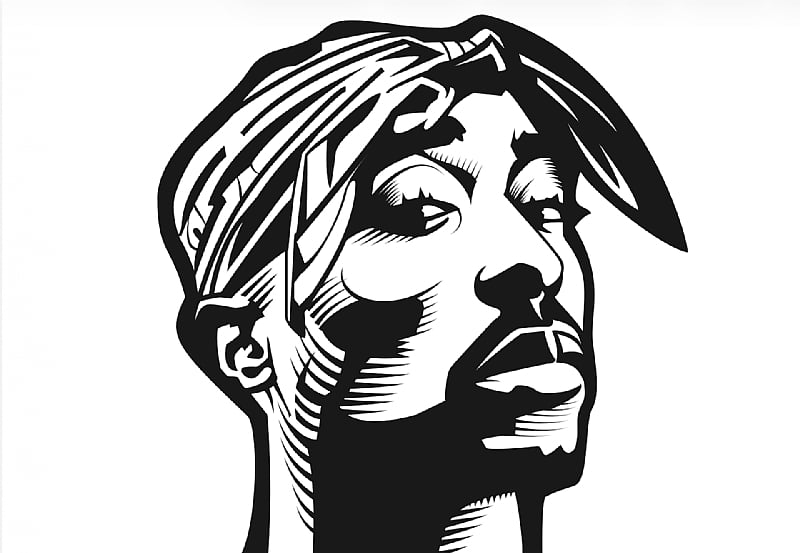


Why Tupac lives on in Cape Town 30 years after he was murdered
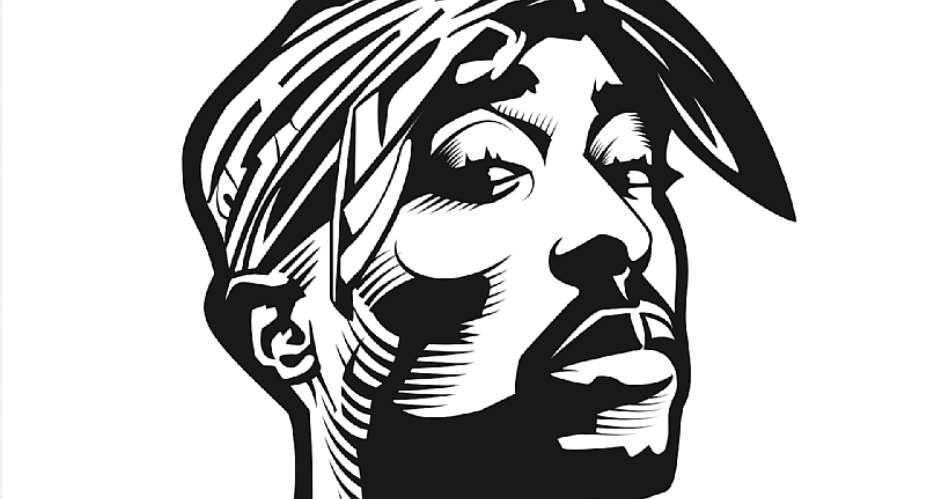
For marginalised young people he is gangster, prophet and revolutionary all at once. – Source: Image by vectorportal.com
Thirty years after world famous US rapper Tupac Shakur was gunned down at the age of 25, his legacy has remained a lasting and continuous presence in Africa.
During my many years of work as a criminologist and researcher, I have witnessed young people in countries as far-flung as Guinea, South Sudan and Zimbabwe strutting the streets in T-shirts emblazoned with his likeness. I’ve also seen murals memorialising him painted on walls in Sierra Leonean villages and in South African townships.
I was so struck by Tupac’s influence in Africa that understanding it became part of five years of ethnographic research for a book on street culture, violent practices, and gang exit in Cape Town’s peripheral Cape Flats communities. Fieldwork included hundreds of hours of interviews with those who live in areas marked by poverty and insecurity that’s driven an estimated 100,000 people into some 130 gangs – fighting each other in a daily struggle over identity and turf wars.
My study of Tupac’s ongoing impact in Cape Town was published in a paper in the journal Ethnography. It found that for marginalised people living on the Cape Flats, Tupac Shakur is more than a musician – he’s a symbol they draw on for dignity and grit to push back against physical threats, material insecurity, and social and personal disempowerment.
It is men – especially poor young men – that most stereotypically connect to the militant fervour of Tupac’s gangsta rap. They look up to him as a street cultural outlaw who attains power and wealth through crime and violence.
But gangster masculinity is only one part of the picture. Female gang members also draw on Shakur’s image as a “street soldier” to perform street culture for many of the same reasons that men do – protection, income, status, and so on – as well as due to threats of sexual violence faced specifically by females.
For those resisting gangs, Tupac acts as a “ghetto prophet” and template for positive transformation. The juxtaposition of rap with religion is significant. It represents another key aspect of his own mythology; he is frequently referred to as a “ghetto saint” because he gave voice to the suffering of Black communities trapped in poverty and violence.
Tupac’s music and legend give marginalised young people in Cape Town’s townships a shared symbolic language to resist oppression and reclaim agency over their own identities. As his music rings out from speakers and headphones all over the Cape Flats, Tupac’s fans hear their own struggles in lyrics, and imagine a better life beyond the boundaries they were born into.
Gang girls
One gang girl I interviewed, named Kelly, started calling herself “Tupac” at the age of 14 after she fled her abusive father. She cut her hair, started wearing a bandanna, and got a nose ring in the style of her rap idol – starting fights, stabbing and robbing to prove that she was a “badass bitch” and a “real west-sider” (a term for US west coast rappers like Tupac). Eventually she was noticed by – and joined – the 28s gang that ruled her community.
Tupac’s legacy on gender is far from straightforward. His music could honour women in one breath and demean them in the next. Songs like Keep Ya Head Up criticised the mistreatment of Black women, while Dear Mama was a tribute to his mother Afeni Shakur – a prominent political activist and a vocal member of the Black Panther Party. But he also used derogatory language towards females, and degraded his enemies by feminising them, especially rival east coast rappers.
Another woman named Meryl – who never joined a gang, but survived an abusive and alcoholic father and later her own addiction – told me she saw Shakur’s story of hardship and resilience mirrored in her own.
His music speaks to different parts of my life, even up until today.
More than a decade sober and working in her community as a counsellor, she said his music had tracked her own transformation, from Hit ‘Em Up in her partying years to Changes as she found sobriety and a deeper purpose.
Ghetto gospel
Gavin first thought Tupac was a cartoon character, after his older brother played him the animated video for the song Do For Love. That brother was a member of the Mongrels and 28s prison gangs in Cape Town – both of which Gavin would eventually follow him into. He recalled:
I see the big boys, they always moving Pac-style … And I’m just a little motherf—er, moving with my brother and them.
While serving 10 years in prison for a gang-related murder, Gavin later tattooed himself with the words “Life Goes On” – the title of a well-known Tupac song – as a reminder that “life had to go on in prison”. In his cell the warders would only allow him a Tupac poster and a bible.
Converted by Tupac’s ghetto gospel, Gavin decided to leave gangs to pursue a career in hip-hop:
He was like a ghetto prophet … I want to be the Pac of the Cape Flats. To be an inspiration like Pac, for another kid like me, that is coming from the gutter.
To follow that vision, Gavin leaned into the politically charged parts of Tupac’s discography and songs that tackle issues like teen pregnancy and police harassment in Black communities.
It’s this more conscious side of Tupac’s music that helped cement his status as a symbol of Black Power in the US, as well as a conduit for broader pan-African struggles.
Lasting legacy
Tupac’s legacy is different things to different people at different times. He is gangster, prophet and revolutionary all at once.
But the common chord is that in his music, Cape Town’s gangland residents find a shared refrain of survival and pride, echoing their own defiance against racism, violence and poverty in Tupac’s voice.
For Kelly, Meryl, Gavin, and others, Tupac is proof that being young, marginal and Black does not necessarily mean being powerless.
All names in this article have been changed
Dariusz Dziewanski does not work for, consult, own shares in or receive funding from any company or organisation that would benefit from this article, and has disclosed no relevant affiliations beyond their academic appointment.
By Dariusz Dziewanski, Honorary research affiliate, Centre of Criminology, University of Cape Town
Disclaimer: “The views expressed in this article are the author’s own and do not necessarily reflect ModernGhana official position. ModernGhana will not be responsible or liable for any inaccurate or incorrect statements in the contributions or columns here.”
Follow our WhatsApp channel for meaningful stories picked for your day.

Top Stories


Originally published on www.modernghana.com